 QA Report
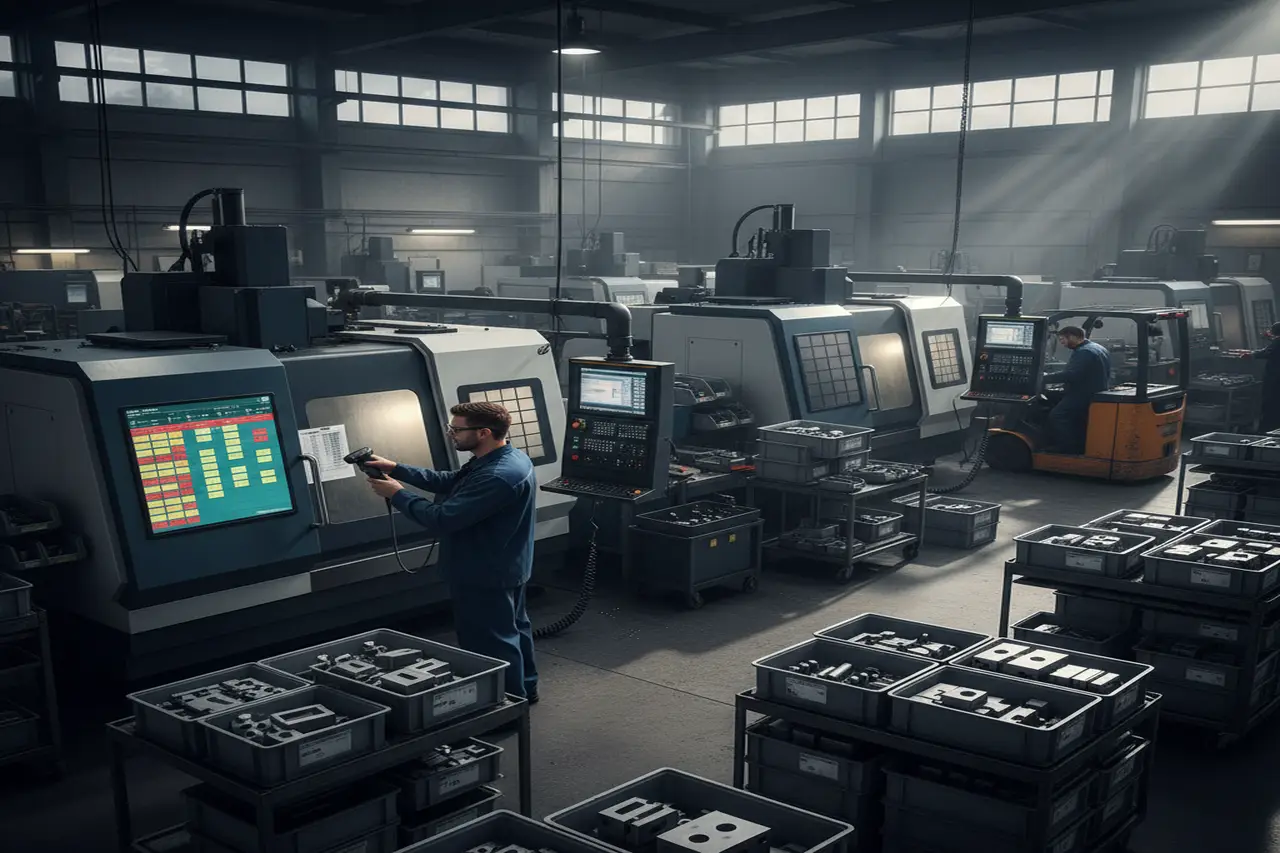

Most machine shops don't lose money on machining. They lose it in the gaps between machining: a batch waiting two days for the next operation nobody knew it was ready for, material that ran out mid-order, a rejected part discovered only at final inspection. A manufacturing execution system (MES) exists to close those gaps - and it doesn't have to be an enterprise monster to do it.
An ERP knows the order exists. A spreadsheet knows what someone last typed into it. Neither knows what is happening on the floor right now. An MES sits exactly there: it takes an order, breaks it into process steps, and tracks every batch through those steps as operators complete them.
For a machine shop, the useful core is small:
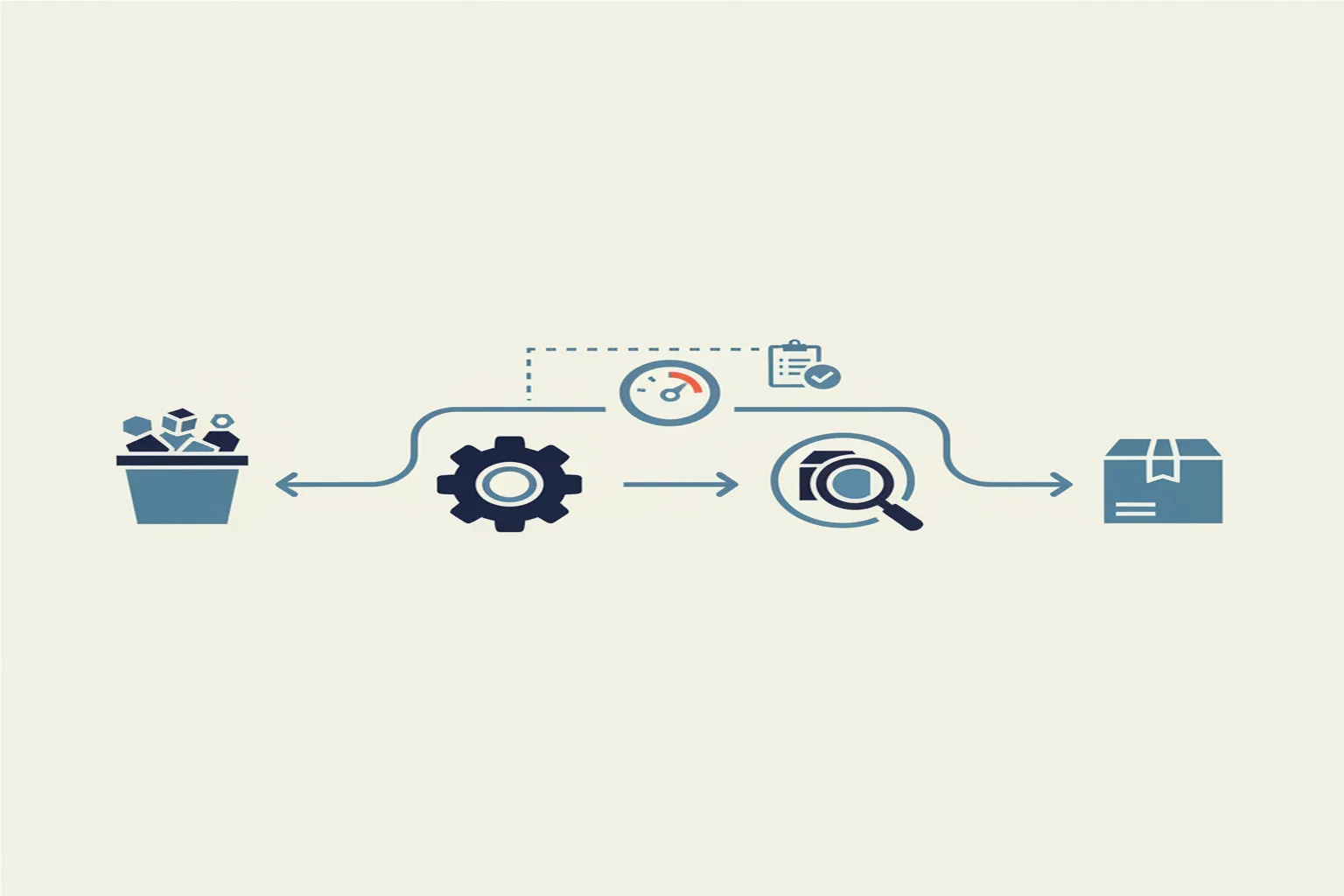
Digital or printed, the Route Card remains the single most effective shop-floor tool ever invented: one page that answers "what is this, what has been done to it, and what happens next." A modern MES doesn't replace it - it generates it. The card is printed from the system with a barcode, operators record step completions against it, and the digital record stays in sync with the paper that travels with the parts.
Practical detail that matters: real production is messy. Batches get split when a rush order takes half the quantity, merged when material arrives late, and partially passed when a sample inspection releases parts early. If your MES can't split, merge, and partially complete batches, it will fight your floor instead of describing it.
A production plan that doesn't see stock is fiction. When inventory control lives inside the MES, the loop closes:
The most expensive words in manufacturing are "we found it at final inspection." When inspection is a step inside the process flow, quality data attaches to the batch as it moves: measurements recorded at in-process checks, rejection reasons captured per step with a category the whole team shares, and audit-ready inspection reports generated from the same records. Traceability stops being a binder-hunting exercise - the batch history is the trace.
This is also where the business side connects. Orders, customers, deliveries, and production status draw from one dataset, so quoting a delivery date or answering a customer's "where is my order" takes seconds - and the same records feed whatever ERP or business tools you already run.
| Signal | Enterprise MES | Right-sized for a shop |
|---|---|---|
| Setup | 6-18 month implementation project | Define process flows, print first Route Card the same week |
| Operators need | Training courses | A browser and a barcode |
| Process changes | Consultant visit | Edit the step template yourself |
| Quality | Separate QMS module, extra license | Inspection is a step in the flow |
| Inventory | Interface to another system | Same platform, same records |
QA-Report's MES production planning was built on the right-hand column: process constructor, Route Cards with barcodes, batch split and merge, live kanban and Gantt boards, rejection tracking, and inventory control with stock movements, allocations, minimum-stock alerts and purchase orders - all in the same platform as the inspection reports.
A machine shop doesn't need an enterprise MES. It needs process flows that match reality, Route Cards the floor actually uses, batch tracking that tolerates splits and rework, and inventory that planning can see. When quality lives inside that flow instead of beside it, traceability and on-time delivery stop being separate battles.
Use our free online ballooning tool to manually number every dimension on your engineering drawing. No login, no email, no credit card. Export a ballooned PDF in seconds.
Try the Free Ballooning ToolWatch how Route Cards, batch tracking and production boards work in practice.
Watch Demo Videos