 QA Report
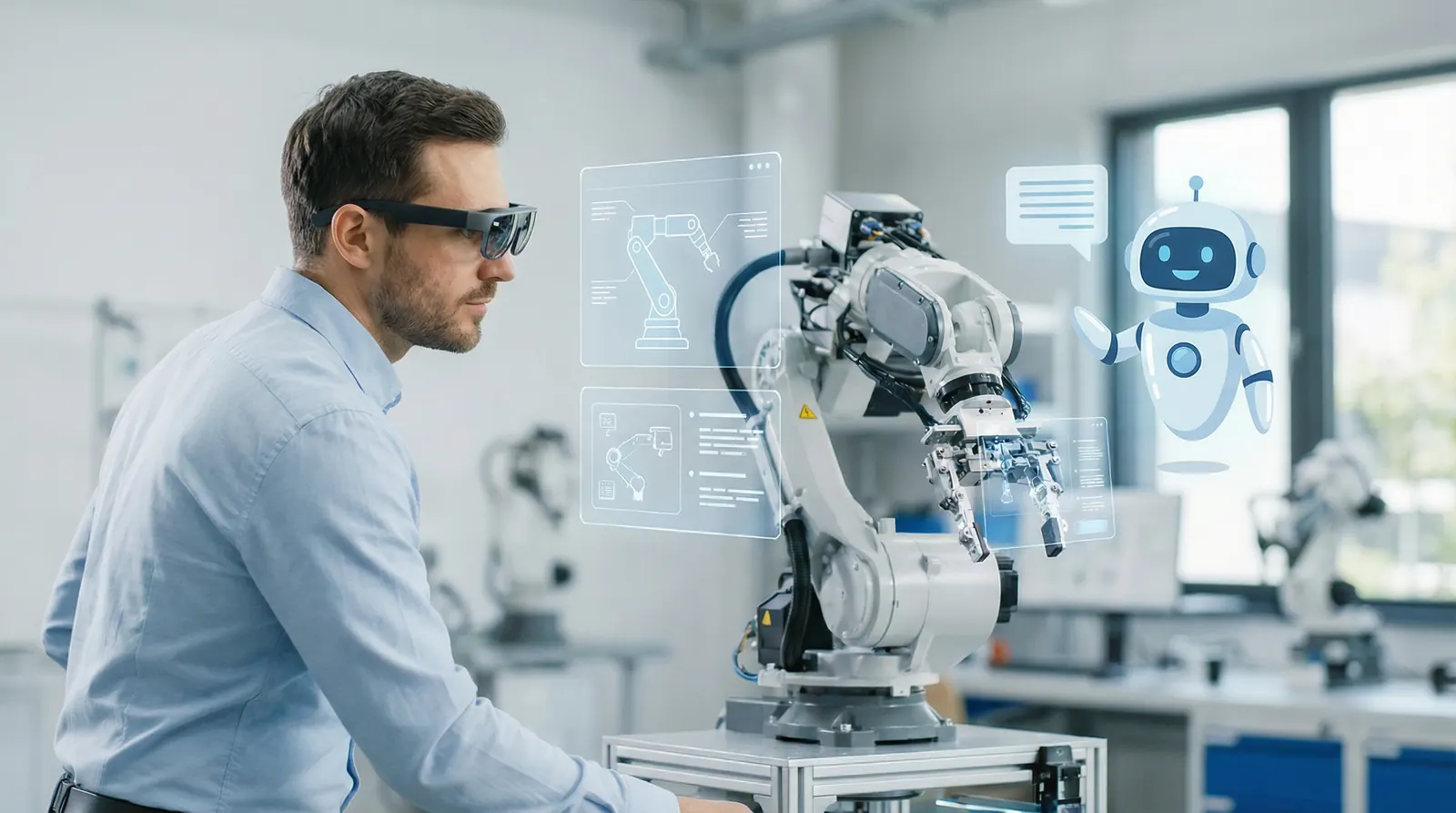

Every machine shop has procedures that live in binders, in someone's head, or nowhere at all. Augmented reality promises to put those procedures right in front of the technician, overlaid on the actual machine. The question worth asking is not whether AR sounds impressive, but where it actually helps and where it does not.
Forget the sci-fi goggles. Most practical AR maintenance today runs on a tablet or a rugged phone. The technician holds the device near the machine, and the screen overlays arrows, labels, or step-by-step instructions on top of the live camera view. Some systems anchor those overlays to specific machine features so the instructions stay locked in position as you move the device around.
A more advanced setup uses a headset or smart glasses so the technician has both hands free. This matters during procedures that require holding a wrench in one hand and a gauge in the other. Headset-based systems also enable remote expert support: an off-site engineer sees the live camera feed, draws annotations on the screen, and talks the on-site technician through the repair in real time.
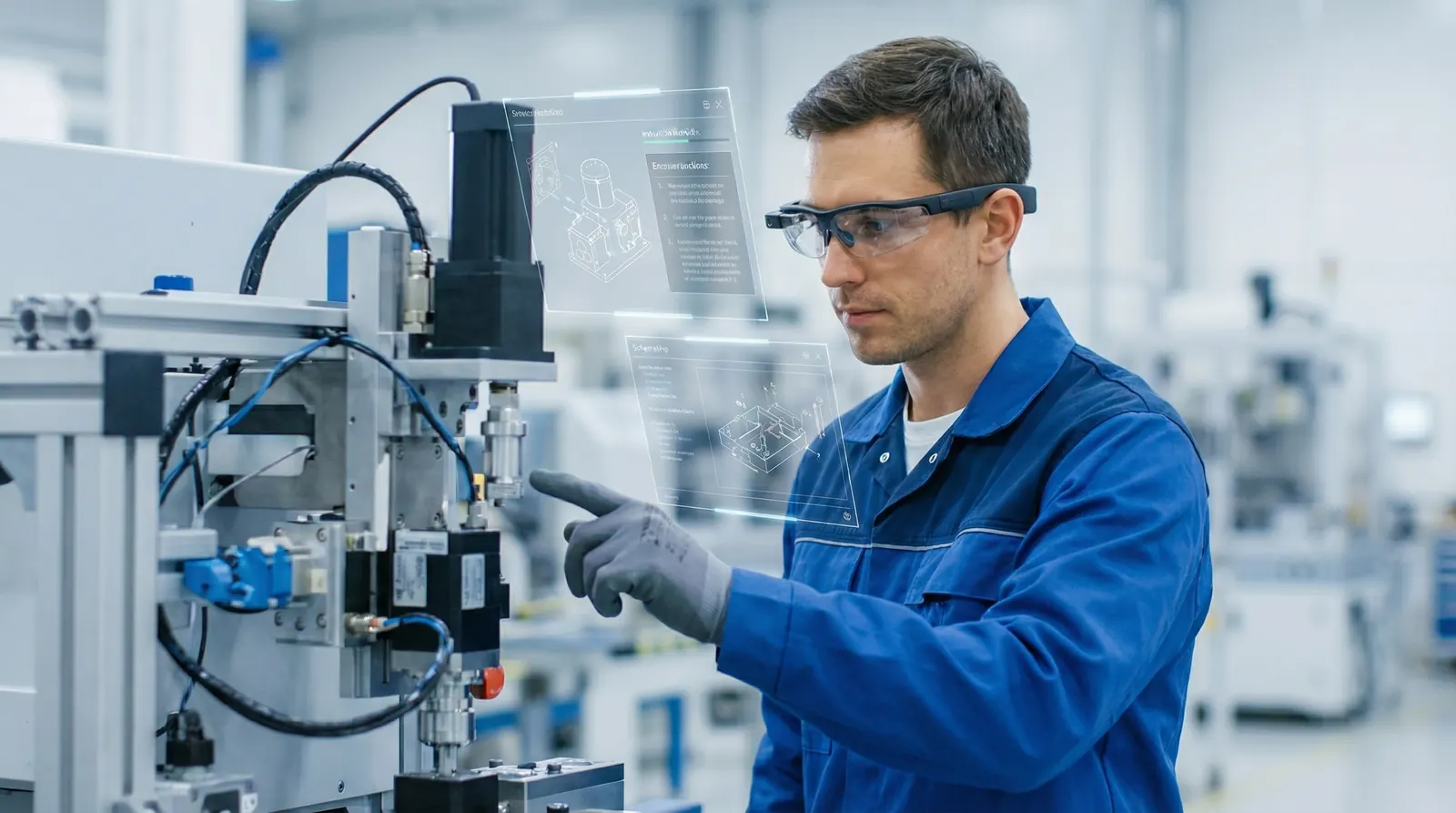
The third piece you will hear about is the digital twin: a 3D model of the machine linked to sensor data. In its simplest form this is a visual map of the machine that shows which component to look at next. In more complex setups it pulls live readings from the machine controller and flags parameters that have drifted out of range.
AR is not equally useful everywhere. It earns its cost in specific situations.
Routine jobs that experienced staff know by heart gain nothing from AR overlays. Asking a technician who has changed the same filter 500 times to hold up a tablet and follow animated arrows is a way to slow them down, not help them.
Shop floor conditions can work against headsets. Safety glasses, hearing protection, and heavy gloves all conflict with current-generation AR headsets. Tablets are more forgiving here, but they still need a clean screen and a free hand.
Wi-Fi dead spots near large metal enclosures are common in machine shops. If the AR system depends on a cloud connection for content delivery, a dropped signal in the middle of a procedure is worse than having no system at all.
The biggest hidden cost is content. Someone has to create, maintain, and update the AR procedures. If the documented steps fall behind the actual machine configuration, technicians stop trusting the system and go back to calling the senior guy. AR content that nobody maintains is shelf-ware within six months.
You do not need a headset or a six-figure platform to begin. The practical first step is to take your most critical maintenance procedures and document them with photos and short text, then put that content on a shared tablet at the machine. This is not technically AR, but it solves the real problem: making the procedure available at the point of work instead of in a binder on a shelf.
Once you have procedures documented digitally, moving to an AR overlay is an incremental step rather than a transformation. The documentation already exists; you are just changing how it is displayed.
For quality managers, machine maintenance is not just an uptime concern. The state of a CNC machine directly affects the parts it produces, and the state of a CMM directly affects the measurements it reports. A spindle bearing that is wearing, a probe tip that is chipped, or a granite table that has not been leveled in months will all show up in inspection results, often as mysterious drift that is hard to trace back to its cause.
This is why the maintenance record and the inspection record belong next to each other. When a batch of parts suddenly shows tolerance deviations, the first question should be: what changed on the machine? If the maintenance log and the inspection data live in separate systems, answering that question takes longer than it should.
The state of your machines affects your measurement results. Keeping maintenance records connected to inspection data makes root cause analysis faster.
QA Report keeps inspection reports and route cards accessible on the shop floor, with engineering drawings and supporting documents attached directly to each report. Technicians and inspectors see the drawing, the measurement results, and the process history in one place, on any device with a browser.
This is the practical baseline that matters whether or not you ever adopt AR. Before overlaying digital instructions on a machine, make sure the people doing the work can already pull up the drawing, the procedure, and the last inspection result without leaving the shop floor. That alone removes a large share of the delays and errors that AR is meant to solve.
Inspection reports, route cards, and drawings accessible on the shop floor. No headset required.
Try QA Report FreeAugmented reality has real applications in maintenance, especially for rare procedures, technician training, and remote OEM support. But the foundation is always the same: documented procedures and inspection records that are available at the point of work. Get that right first, and AR becomes a natural next step rather than a leap of faith.