 QA Report
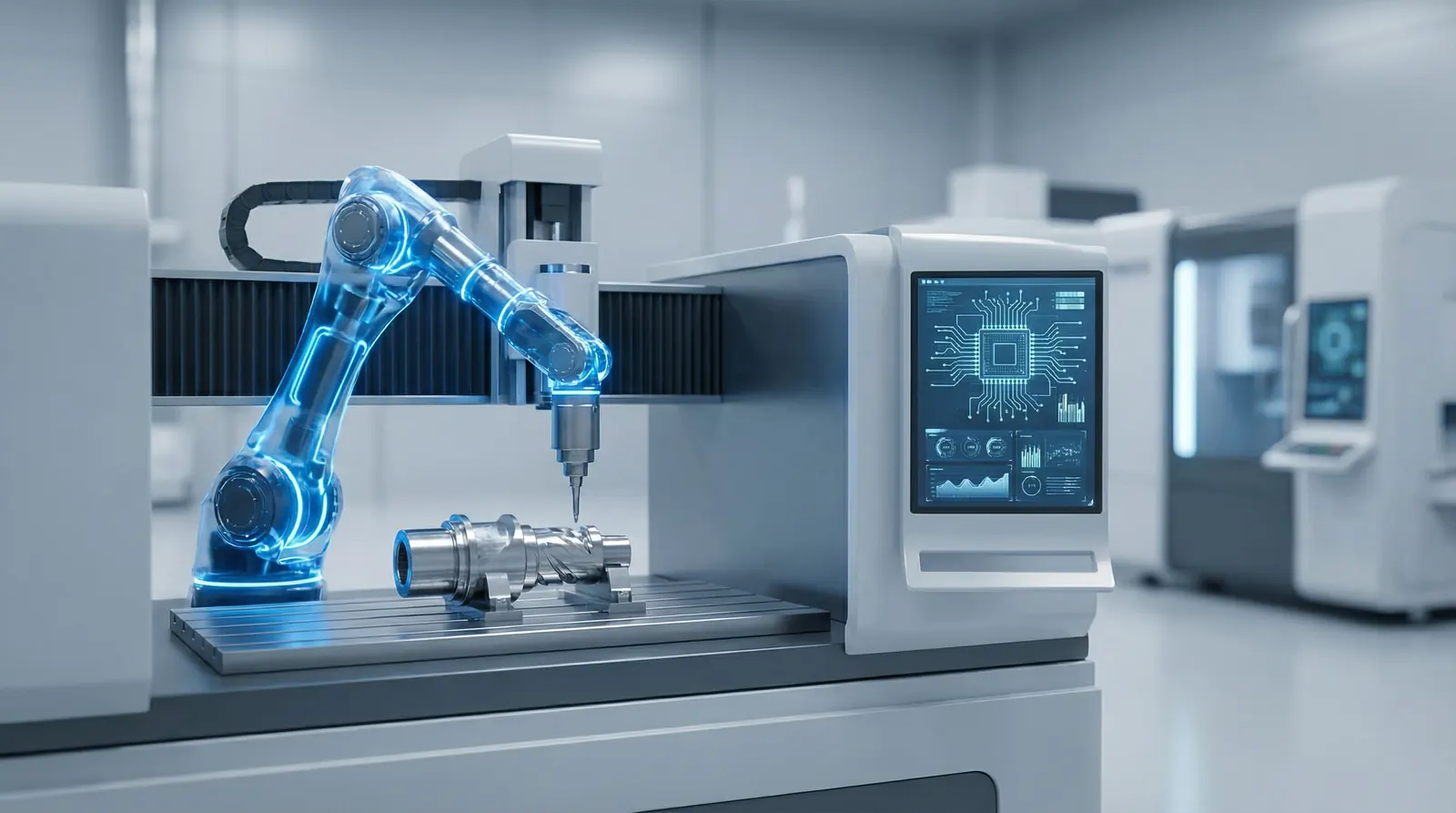

AI is already changing how some machine shops run their CNC equipment. Not in the way most vendor pitches suggest, but in specific, measurable ways that matter to shop owners and quality engineers. Here is what is real, what is not, and where to start.
The most mature use of AI in CNC machining is adaptive feed and speed control. Modern controllers can adjust feed rates and spindle speeds mid-cut based on cutting forces and motor load. The system learns optimal parameters for a given material and geometry over a few runs, then applies them automatically. The result is shorter cycle times on roughing passes and fewer broken tools on aggressive cuts. Shops machining aerospace alloys and hardened steels use this in production today.
Tool-wear and breakage prediction is the second area with real traction. By monitoring spindle current, vibration, and acoustic emission data, machine-learning models can estimate remaining tool life and flag abnormal wear before a tool fails. Operators replace inserts on a planned schedule rather than reacting to a crash or a scrapped part. The catch: these models need training data from your specific setup. Off-the-shelf models trained on someone else's machine give unreliable results.
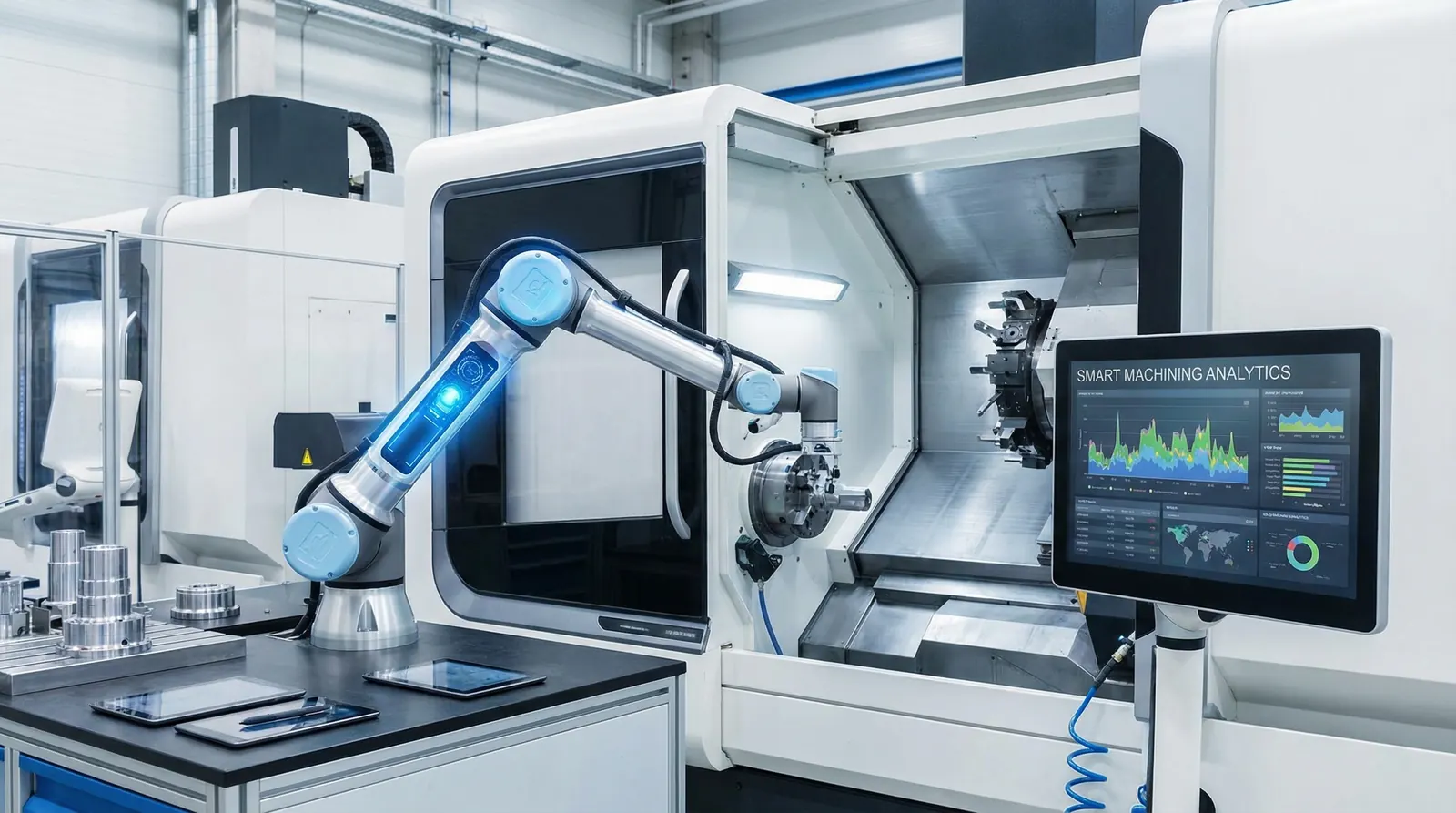
Anomaly detection on machine alarms is a quieter win. Most shops collect alarm logs, but nobody reads them systematically. Pattern-recognition tools can surface recurring alarm sequences that precede failures: a thermal alarm followed by a servo error that leads to an axis fault two days later. Catching these patterns early prevents unplanned downtime.
CAM software vendors have started embedding AI-driven toolpath suggestions. Given a part geometry and material, the system proposes roughing and finishing strategies based on what has worked on similar shapes before. This is useful for less experienced programmers and for quoting jobs quickly, but experienced machinists still review and edit the output. The AI suggests; the machinist decides.
Scheduling and quoting assistance is another area where pattern matching helps. If a shop has a few years of job history with actual run times, a model can estimate cycle times for new quotes more accurately than gut feel alone. It can also flag scheduling conflicts and suggest job sequencing to reduce setup changes. These tools do not replace the scheduler; they give better starting numbers to work from.
Two claims deserve skepticism. The first is the fully autonomous shop, where AI runs machines, loads parts, inspects them, and ships orders without human involvement. The technology for each step exists in isolation, but integrating it end-to-end at a level reliable enough for production is not something any shop has demonstrated at scale. Lights-out machining of simple, repeating parts is well established, but that is automation, not AI.
The second is "AI quality" without measurement data. Some marketing materials suggest that AI can guarantee part quality directly from machine signals alone. In practice, process monitoring can flag when something went wrong during a cut, but it cannot replace dimensional inspection. A spindle-load trace that looks normal does not prove the part is in tolerance. You still need to measure.
Every useful AI application in machining depends on the same foundation: clean, labelled data. That means:
Most small and mid-size shops do not have this data in usable form. Getting it organized is the real first step toward AI, not buying software.
For quality engineers, the most immediate value of AI is pattern detection across inspection results. When inspection data is structured and stored consistently, it becomes possible to spot trends that no single inspector would catch: a dimension drifting slowly over weeks, a tolerance that fails more often on one machine than another, or a material lot that correlates with higher scrap rates. These patterns are invisible in individual reports but obvious in aggregate data.
Automated reading of engineering drawings is another area where AI is producing practical results today. Identifying dimensions, tolerances, GD&T callouts, and datum references on a 2D drawing is tedious, error-prone manual work. Image recognition models trained on engineering drawings can detect and extract these features, saving hours of data entry on complex parts.
QA Report applies this approach directly: its free ballooning tool uses image recognition to detect dimensions on uploaded drawings and balloon them automatically, turning a manual task into a few clicks. The structured inspection data that QA Report stores per batch and serial number is exactly the kind of clean, traceable dataset that makes downstream analysis possible, whether you build your own dashboards or feed the data into a broader analytics pipeline.
If you run a small or mid-size machine shop and want to move toward AI without wasting money, start here:
AI in CNC machining is real but narrow. The shops getting value from it today are the ones that invested in clean data and consistent processes first, then applied targeted tools to specific problems.
Structured, traceable inspection records are the foundation for any quality analytics. QA Report makes that foundation easy to build.
Try QA Report FreeAI is not going to replace machinists or quality engineers. What it can do, today, is make specific parts of the job faster and more consistent: predicting tool wear, optimizing feed rates, spotting quality trends across batches, and reading dimensions off drawings. The shops that will benefit most are the ones that start with the foundation, clean data and consistent processes, rather than chasing the most impressive demo.