 QA Report

China shipped 90% of all humanoid robots last year, and the tech world immediately asked the wrong question: how do we catch up on AI? The real bottleneck isn't the neural network or training data. It's the gripper that can't maintain tolerance after 5,000 cycles, the joint that fails under real-world load conditions, and the frame that looks perfect in CAD but buckles in production.
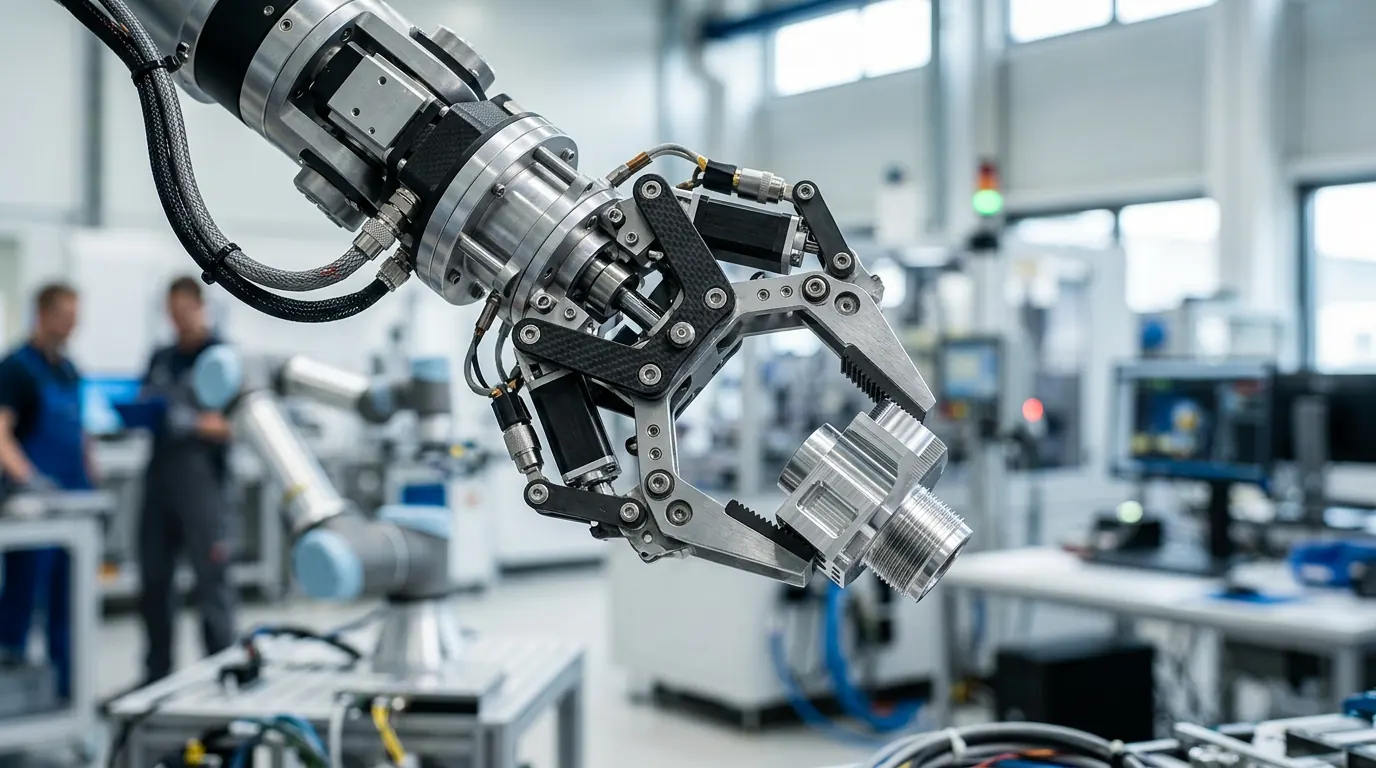
Physical AI systems are only as capable as the mechanical systems executing their commands. A sophisticated motion-planning algorithm means nothing when your gripper can't reliably handle parts with variable geometry or when joint assemblies designed for lab demonstrations fail after a few thousand production cycles. The challenge isn't teaching a robot to recognize an object—it's engineering a wrist mechanism that can apply consistent torque across temperature variations, or designing fingers that maintain positional accuracy after repeated contact with abrasive materials.
This is where China's advantage becomes clear. Their lead isn't in transformer models or reinforcement learning—it's in manufacturing infrastructure that can rapidly iterate on mechanical designs, test them under real production conditions, and scale proven systems. Companies like Unitree and Fourier Intelligence aren't winning because of proprietary AI. They're winning because their mechanical engineering teams can take a joint design from concept to 10,000-unit production in months, not years.
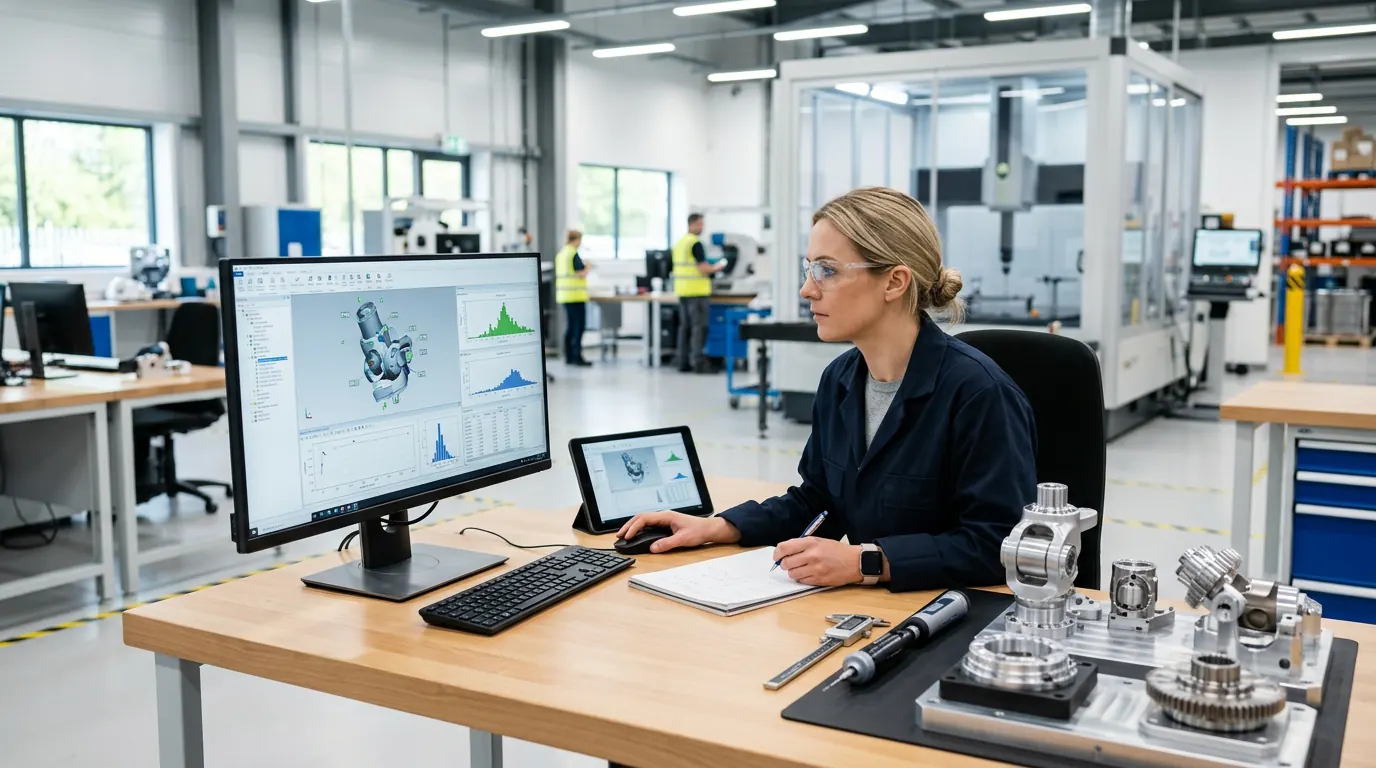
The skills gap in humanoid robotics isn't in computer science—it's in Design for Manufacturing (DFM) expertise applied to complex mechatronic systems. Engineers who can design for assembly tolerances, predict failure modes under cyclic loading, and optimize designs for both performance and manufacturability are suddenly more valuable than ML researchers. A mechanical engineer who understands GD&T, can interpret CMM inspection data, and knows how to design for injection molding or die casting constraints is worth their weight in silicon.
Yet here's the disconnect: most mechanical engineering teams are still operating with pre-digital quality processes. They're managing inspection reports in Excel spreadsheets, manually interpreting CMM output files to verify tolerances, and spending hours hand-ballooning drawings for first article inspections. When your product development cycle depends on rapid iteration and your competitive advantage is manufacturing speed, these manual processes become critical path bottlenecks. The gap between physical AI ambition and manufacturing reality isn't just about better engineers—it's about giving those engineers modern tools that match the pace of development.
Closing the humanoid robotics gap requires more than AI talent—it requires mechanical engineering teams equipped to iterate at software speed. That means modern quality control workflows, automated CMM interpretation, and digital tools that eliminate manual bottlenecks. At qa-report.com, we're building the QC infrastructure that lets mechanical teams move as fast as the AI systems they're designing for.
See how qa-report.com can help your team work smarter.
Learn More